
Job hunting online is really tiring, learing how to avoid job scams online has become essential for anyone applying for jobs on the internet. You send in a job application then you wait to hear and after that you send in another job application. Sometimes with job hunting you are just hoping that someone from the company will get back to you about the job.
Scammers are aware of this situation with job hunting. This is the reason that fake job offers from scammers have become so common, with job hunting.
If you are looking for ways to avoid job scams online you are already doing the thing. The truth is, most people who fall for job scams are not careless or greedy. They are simply tired, hopeful or under a lot of pressure. This post is written to help you stay safe with scams without making you scared of every job opportunity that comes your way, with job scams.

Let’s explore it in a straightforward, useful manner.
What job scams actually look like in real life
In simple terms job scams are fake vacancies designed to get something from you. Money, personal details, documents, or access to your accounts.
They don’t always look obvious. Some scammers copy real company names. Others sound friendly and professional. A few even conduct fake interviews.
One thing many people miss is that job scams rarely feel like scams at first. They often start with:
- A polite email or message
- A job that sounds easy
- Quick responses and lots of praise
At that point, nothing feels wrong. That’s how people get pulled in.
Common online job scam patterns people fall for
Over the years, few patterns show up again and again. Once you know them they’re easier to spot.
Fake job offers with fast hiring
You apply today. Tomorrow, you’re “selected.” No real interview. No detailed questions. Just a job offer waiting for you.
Requests for upfront payments
Training fees, registration fees, processing fees, equipment costs. Different names, same trick. Real employers don’t ask for money.
Too-good-to-be-true remote jobs
- High pay,
- Flexible hours,
- Noo experience needed.
These work from home scams are everywhere and still fool many job seekers.
Impersonating real companies
Scammers copy real company names and logos. The email looks close, but not quite right. That’s intentional.
Asking for personal details too early
ID copies, bank details, or full addresses before you’ve even spoken properly. Big red flag.
Clear warning signs most victims ignore
The truth is, many scam victims notice something feels off, but ignore it. Here are warning signs you should never brush aside:
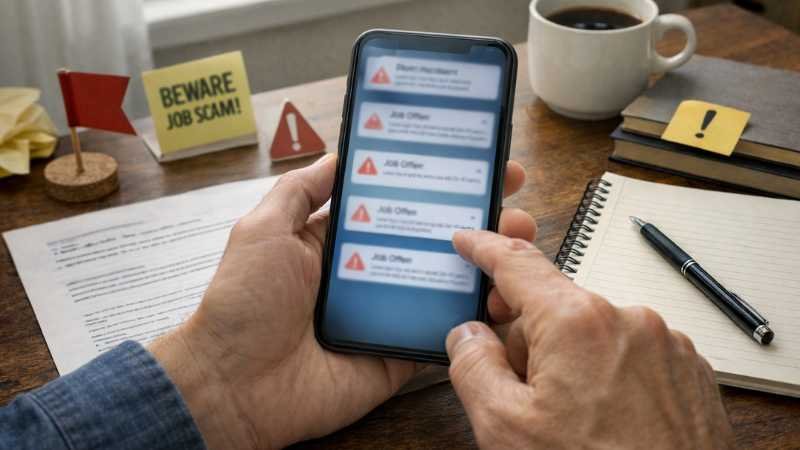
- You’re asked to pay anything to get the job
- The job description is very vague
- Messages are rushed or pushy
- Poor grammar mixed with “urgent hiring”
- Interviews only through chat, never voice or video
- Emails coming from free domains instead of company ones
One warning sign alone may not mean a scam. But several together usually do.
How to avoid job scams online by verifying offers properly
Let’s talk about how to avoid job scams online in practical way. You don’t need special tools. Just common sense and a few checks.
Firstly read the job description slowly. Does it clearly explain the role and requirements? Scams often stay very general.
Next, check consistency. Does the company name match the email address? Does the job title stay the same across messages?
Pay attention to how communication feels. Real recruiters ask questions. They want to understand your skills. Scammers mostly talk about payments, urgency, or how easy the job is.
Also, trust your instincts. If something feels rushed or strange, pause. Legitimate jobs won’t disappear because you took time to think.
Tips to stay safe and avoid jobs scams online
You have no need to be suspecious of everything. Just follow safer methods.
- Apply through well-known job platforms
- Keep your resume professional and simple
- Avoid sharing sensitive information early
- Save records of where you applied
- Use separate email for job applications if possible
Over time, these tiny actions have major consequences.
Staying safe doesn’t mean missing opportunities. It means choosing better ones.
What to do if something feels suspicious
The moment something doesn’t feel right, stop engaging. You don’t owe explanations.
Emails or messages can be saved for later use. Change passwords and keep an eye on accounts if you disclosed any personal information.
If money was requested or taken, don’t panic. Focus on protecting yourself.
Above all, avoid embarrassment. The goal of job scams is to appear authentic. Smart, experienced people fall for them too.
A calm word at the end
Looking for work online is part of modern life now. Scams aren’t going away, but neither are real jobs.
Knowing how to avoid job scams online is not about fear. It’s about awareness. Slow down. Read carefully. Ask questions. Trust your gut.
The right job won’t pressure you, rush you, or charge you. It will respect your time and effort. And those opportunities do exist.
Stay alert. Stay informed. And keep going.
Disclaimer
This content is only for informational purpose. We do not charge any fees and do not act as recruitment agency.