
Knowing how to write professional CV is one of the most important steps in any job search. A good resume is an important part of applying for job. In most cases, it is the first document an employer reviews before deciding whether to move forward with a candidate. When you are looking for a job your resume is very important. Your resume should tell the people reading it who you are and what you can do. It should also say what skills you have and how the things you have done before match the job you want to get. This way the people reading your resume can see that you are a fit, for the job.
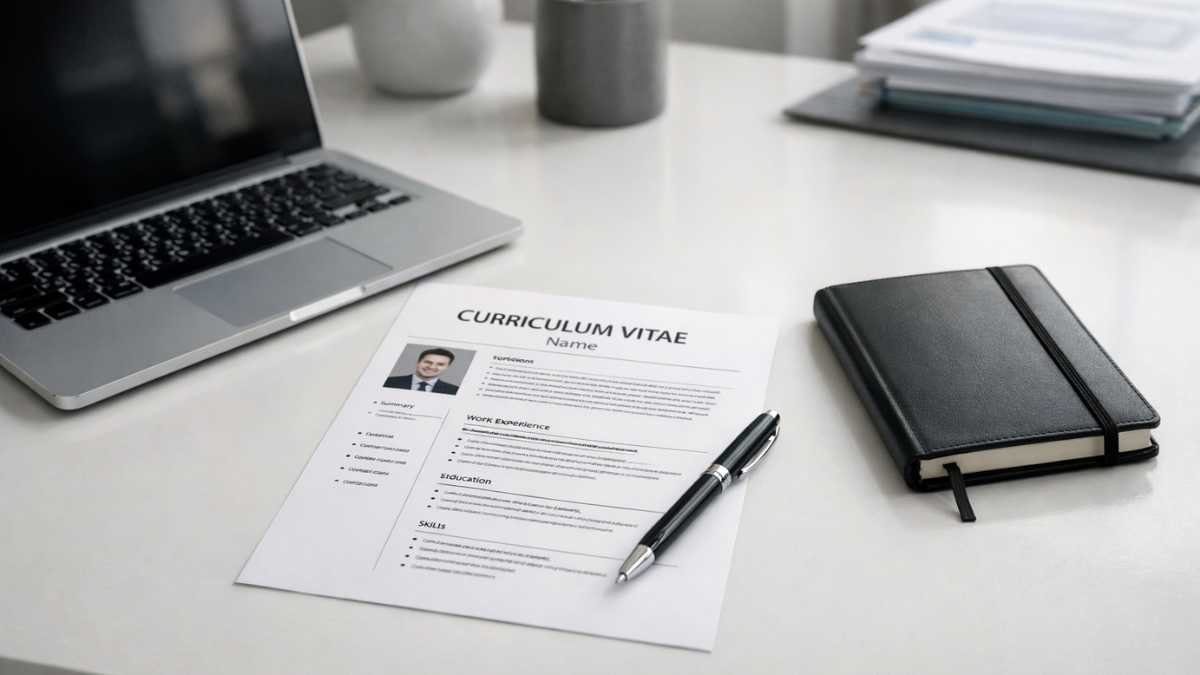
Difference Between a CV and a Resume
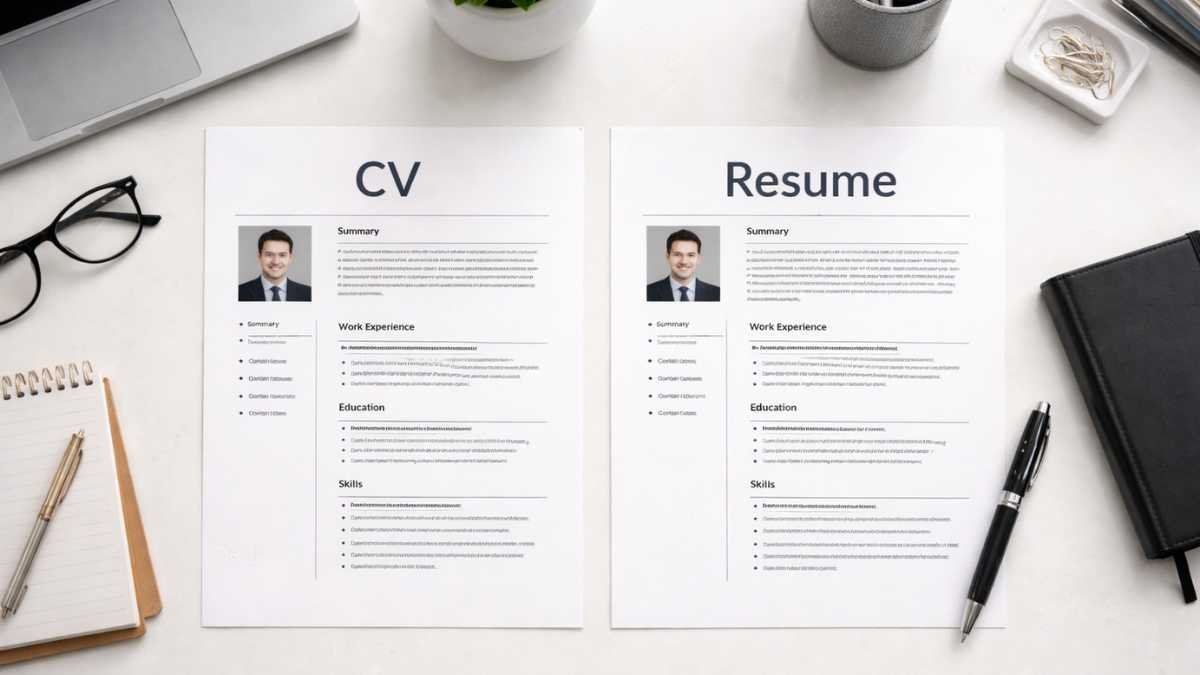
People who are looking for job often use the terms Curriculum Vitae. Resume to mean the same thing.. The truth is, they are not exactly the same. There are some differences, between a Curriculum Vitae and a resume that are really important to know.
A Curriculum Vitae is usually more detailed than documents. It has an overview of your Curriculum Vitae education your work experience, the skills you have and the certifications you have obtained. In countries, especially outside the United States employers prefer a Curriculum Vitae when they are looking at job applications, particularly, for jobs that are overseas.
A resume is really short and to the point. It shows the skills that’re most important for the job you want. The CV usually has one or two pages. This is because it only talks about the things that are relevant to the specific role. A resume is like a look, at what you can do.
Before applying, always check which document the employer requires. Understanding this difference helps you prepare the right job application CV.
Key Sections of a Professional CV
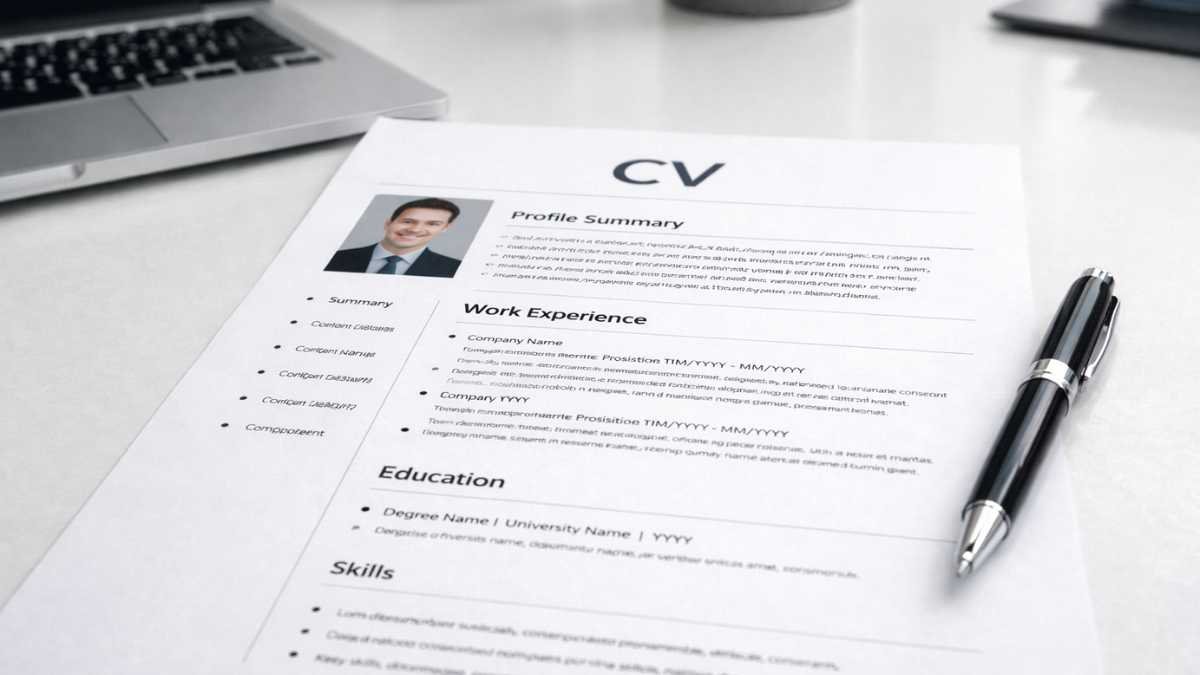
A simple and neat CV format makes it easy for people to read and understand the information, about you. Most CVs have these parts:
Personal Information
Start with your full name, phone number, email address, and current locatio. Keep this section simple. Avoid adding unnecessary details unless they are required.
Summary
The thing at the top of your resume is like an introduction. It tells people about your past what you are good at and what you want to do in your career. You should keep this part short a few lines and talk about what you can bring to a job, as a professional. This is what people will see first make sure you tell them about your skills and what you can do.
Education
Education is pretty straightforward. Just list out your degrees or whatever qualifications you have and the years you finished. I think it is best to make this section just facts, nothing extra or fluffy.
Work Experience to Write in a Professional CV
Add experience starting with the most recent job. Use bullet points to explain achievements clearly.
Skills
This could be stuff like technical abilities, knowing certain software, or even softer things, you know, like how well you work in a team. It seems like keeping it as a list makes sense.
Additional Sections to Write in a Professional CV
There might be other sections too. For example, certifications, languages, or any professional training. But only include them if they actually add something useful, otherwise it might not be worth it. This part gets a bit messy sometimes, deciding what counts.
How to Write a Professional CV for Local Jobs
When you are making CV for local jobs, in your area it is really important that your CV is what local employers are looking for. This means your CV should match what local hiring managers expect to see. Local jobs have hiring expectations so you need to make sure your CV fits with these local hiring expectations.
When you are looking for a job start by reading the job description carefully. Use the keywords from the job description in a way so your Curriculum Vitae is easy to understand and it shows that you have the skills the employer is looking for. The job description and the keywords, in it also help the computer systems that screen the applications.
Keep your CV length reasonable. In most cases, two to three pages are enough. A simple CV format with clean fonts and bullet points improves readability.
How to Write a Professional CV for Overseas Jobs
When you are writing a cv for overseas jobs in another country you have to be really careful. Recruiters in countries have different ideas about what they want to see in curriculum vitae. So you have to pay attention to your cv when you are applying for overseas jobs. This means you have to make sure your cv for jobs is just right.
To start you need to find out what people think is the length and layout for a CV in that area. Some people who hire want to see a lot of details in a CV. Others, like them to be short and simple.
When you are writing about yourself make sure to include the fact that you have worked with people from countries like global teams. Do not give out things about yourself such, as how old you are or pictures of yourself unless they are asking for that information.
Grammer mistakes can reduce your chances. So review your CV carefully before submitting.
CV Mistakes to Avoid
Understanding CV mistakes to avoid can improve your job application.
One big problem people have is that they use the resume for every single job they apply to. If you make your resume fit the job you are applying for it is a lot more useful. Using a resume that is tailored to the job makes your resume more relevant, to the people who are hiring for that job.
Poor formatting is an issue. It can be pretty annoying. When you have paragraphs it is tough to read.. Unclear sections do not help either. Inconsistent fonts are also a problem. They make your CVs hard to read. Your CVs.
Finally, always update your CV. Outdated information can create confusion.
Tips to Make Your CV Stand Out
When you are trying to make a resume there are some things you should do. These things are also helpful when you are learning how to make a Curriculum Vitae or a CV for short. I will just call it a CV. So here are some tips, for writing a resume that you can also use when you are making a CV.
- Use action words to describe your work
- Highlight achievements where possible
- Keep sentences clear and direct
- Adjust your CV for each job
When you are getting your resume ready it is an idea to save your CV as a PDF file. The reason for this is that most people can open a PDF file. However if someone asks you for your CV in a format you should save your CV in that format instead. So always save your CV as a PDF unless someone asks you for a format, for your CV.
These steps help create a strong and professional job application CV.
Conclusion
Learning how to write professional CV is important for candidates at every stage. A clear structure and relevant details helps employers understand your value quickly.
By using professional CV format and following reliable CV writing guide, you improve the overall quality of your applications. While CV cannot gurantee job, it plays important role in opening the door to new opportunities.
Disclaimer
This article is for informational purposes only. It does not gurantee job placement or employment results. Hiring decisions depend on employer requirements and qualifications.